The trade that was working — until it didn’t have to be wrong to fail
Leopold Aschenbrenner, a former OpenAI researcher, built Situational Awareness around a coherent idea: scaling AI models would require a massive build-out of chips, data centers, electricity, and memory, and the companies supplying that physical layer were undervalued relative to the demand coming their way. For a while, the market agreed emphatically. The fund reportedly returned 439% for the year through June, and assets under management swelled from roughly $9 billion in March to a peak near $45 billion in early July.
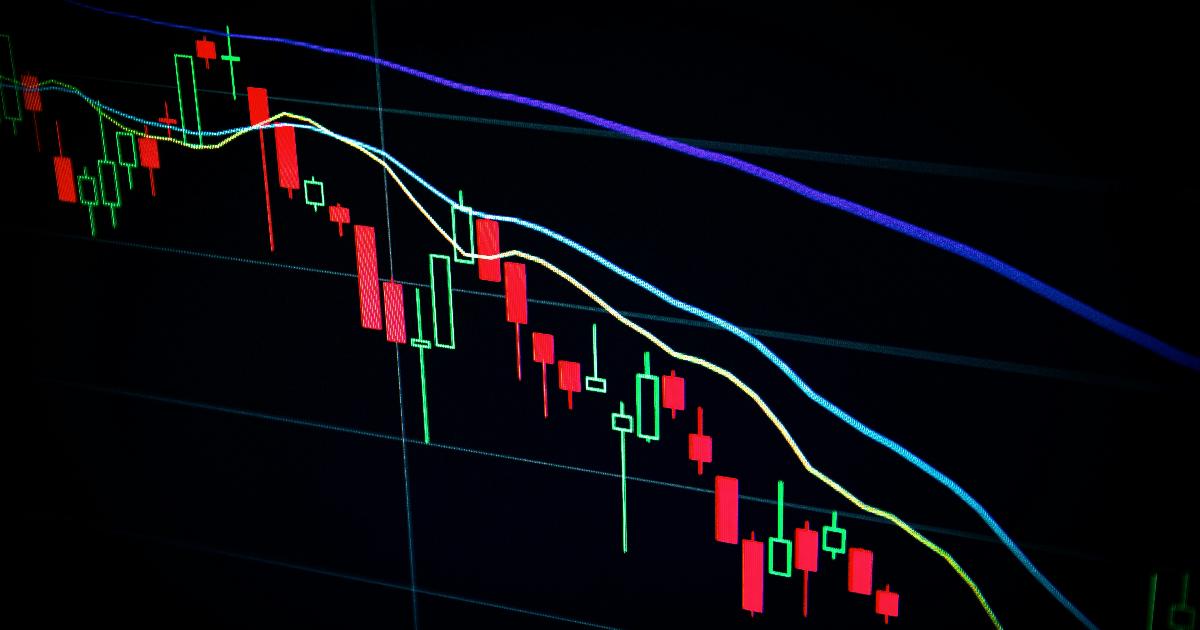
Then AI infrastructure stocks corrected. Names like SK Hynix, Bloom Energy, and Nebius Group fell more than 30% over a matter of weeks, part of a broader 30–60% pullback across the group. Painful, certainly — but even after that drop, many of these stocks were still showing solid gains over the prior 12 to 18 months. A normal, unleveraged investor holding the same basket would have taken a rough month, not a career-defining crisis. Situational Awareness had no such luxury. Reports put the fund’s July losses around 67%, and it ended up selling the bulk of its public equity portfolio to Ken Griffin’s Citadel, with assets under management falling to roughly $10 billion. The difference between "a rough month" and "a forced liquidation" was leverage.
How a plausible thesis becomes a liquidity emergency
According to the Wall Street Journal’s reporting, cited in the original analysis, Situational Awareness was borrowing $3 to $4 for every $1 of its own capital — sometimes more — and layering options on top to amplify returns further. That structure does something specific to risk: it detaches the size of a loss from the merits of the underlying idea.
The arithmetic is unforgiving. At 5x leverage, a 10% decline in the portfolio erases roughly half of the investor’s equity; a 20% decline wipes it out completely. And brokers do not wait for that final outcome before acting. Maintenance margin rules typically require that an investor’s equity stay above a set percentage of the securities’ current value — commonly around 25% under FINRA rules, though individual firms can and do set higher "house" requirements, and they can raise those requirements without advance notice. When equity falls below the threshold, the firm can sell the account’s holdings without consulting the client on which assets to sell or when. The chain from a normal drawdown to a forced sale looks like this:
flowchart TD
 A[Plausible AI infrastructure thesis] --> B[Concentrated, correlated positions]
 B --> C[Leverage 3x-5x plus options]
 C --> D[Normal sector drawdown]
 D --> E[Margin call / collateral demand]
 E --> F[Forced sale at a discount]
Every step in that chain is ordinary on its own. Concentration is a common feature of high-conviction investing. Sector corrections happen regularly. Margin calls follow predictable, well-documented rules. It’s the combination — a concentrated, correlated bet financed with borrowed money — that turns a manageable setback into a loss of control. Aschenbrenner reportedly viewed the July selloff as a buying opportunity and even invited investors to add capital, but the appeal did not attract the commitments needed, and the fund’s leverage left it without the time to wait for sentiment to turn.
Separating the quality of the idea from the quality of the construction
This is where the "I’m young, I have time to recover" argument breaks down. Time horizon is a property of the investor. It has no bearing on whether a lender demands more collateral tomorrow morning. A 25-year-old with a correct 10-year thesis and a 5x-levered position can still be forced out in week three, long before the thesis has a chance to prove itself. Youth buys patience only if the position itself is allowed to survive.
It helps to separate two questions that investors routinely blur together: is the idea sound, and can the position survive being wrong about the timing?
| Dimension | Thesis risk (is the idea right?) | Survival risk (can you hold the position?) |
|---|---|---|
| What can go wrong | AI demand grows more slowly than expected; competitors erode margins; valuations were already too rich | A normal price swing triggers a margin call regardless of the long-term outcome |
| Who decides the outcome | The market, over years | A lender or broker, potentially within days |
| Recoverable if wrong? | Often yes — over a long horizon, being early is not the same as being wrong | No — a forced sale locks in the loss and exits the position permanently |
| What amplifies it | Bad luck, timing, competition | Leverage, concentration, correlated holdings, options |
Notice that leverage sits entirely on the survival side of the table. It does nothing to make the thesis more correct; it only shrinks the amount of adverse movement the investor can absorb before someone else makes the exit decision for them.
What the aftermath does — and doesn’t — tell us
It’s worth being precise about what happened next, because the story has already attracted some loose retelling. Situational Awareness sold its public stock portfolio, but reporting indicates it retained private holdings, including a stake in Anthropic reportedly valued around $5 billion — the fund did not liquidate everything, and it did not stop investing altogether. Separately, a later report highlighting a roughly $400 million IREN position traced back to a Form 13F covering the quarter ended March 31 — a delayed regulatory snapshot, not evidence of a fresh trade placed after the July unwind. Treating an old filing as a live comeback story is its own small lesson in reading financial disclosures carefully.
None of this proves the AI infrastructure thesis was wrong, and it doesn’t prove leverage was the sole cause of the fund’s losses — concentration, options exposure, and investor redemptions likely all played a role, and the public record doesn’t fully separate their individual contributions. What the episode does establish, cleanly, is the mechanism: margin debt across U.S. brokerages had already climbed 77% over roughly 14 months to an all-time high before this correction hit, a pattern that has preceded serious market stress in the past. Leverage doesn’t ask whether you’re right. It only asks whether you can post more collateral by tomorrow.
The takeaway
A good investment thesis is necessary, but it’s not sufficient. What determines whether an investor actually collects the reward for being right is whether the position can survive the volatility that arrives before the payoff does. Leverage doesn’t change your odds of being correct — it changes who gets to decide when you find out.